
 By
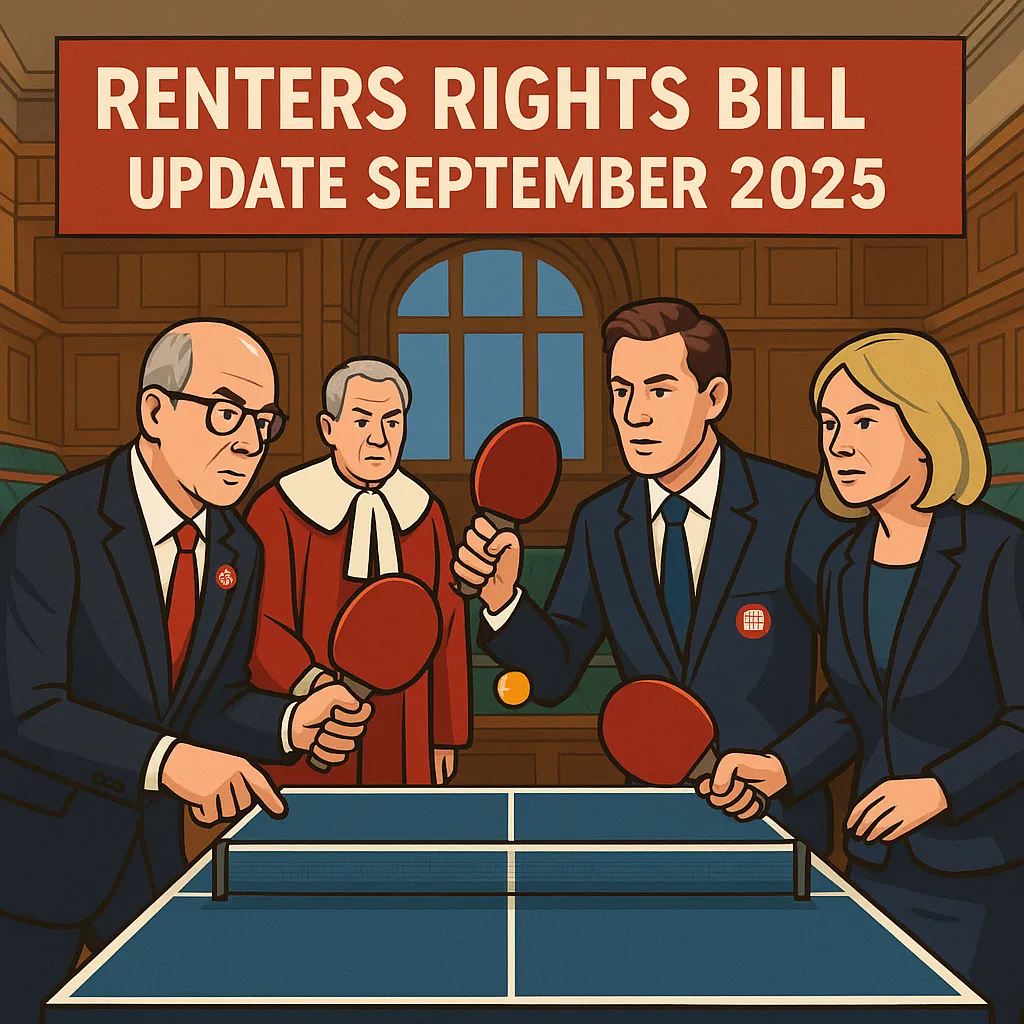
By Renters Rights Bill – We Start a Game of Ping Pong !
🚨 The Renters Rights Bill is moving closer to becoming law – but landlords still have time to prepare. Here’s the latest update and what you should be doing now.
📌 What Happened in Parliament This Week
The House of Commons has now considered the amendments made by the House of Lords. Most of the Lords’ suggested changes were rejected, with MPs only agreeing to government-backed amendments.
That means the Bill will now return to the House of Lords for reconsideration. This back-and-forth is called “parliamentary ping pong” – and it can continue until both Houses agree on the final version of the Bill.
The key point for landlords is timing:
- The House of Lords does not sit again until 13 October.
- This makes Royal Assent – when the Bill formally becomes law – unlikely before October or November 2025 at the earliest.
⏳ What Happens Next
Even when Royal Assent is granted, the Bill will not come into force immediately. Instead, there will be:
- An implementation date – when the legislation officially begins to apply. This date has not been set and could vary depending on the readiness of systems and guidance.
- A transitionary period – it’s likely that landlords will be given a grace period before some parts of the law are enforced. The NRLA is lobbying for a minimum of six months from the implementation date, but this is not guaranteed.
- Different timelines for different measures – not everything will start at once. For example, the national database of landlords and rental property will take significantly longer to roll out. The government has not yet defined what information the database will hold, how it will be managed, or which organisation will run it.
The result is that while the direction of travel is clear, the detail is still uncertain. This uncertainty makes it all the more important for landlords to be proactive.
⚖️ Why This Matters to Landlords
The Renters Rights Bill represents one of the most significant overhauls of rental law in recent decades. Although the full detail will only emerge once secondary legislation (the regulations that implement the Bill) is published, we can already be confident about the scale of change:
- The end of section 21 evictions, and new grounds for eviction under section 8
- No more fixed term contracts, all contracts will be periodic from the beginning
- New compliance standards will add to existing landlord responsibilities.
- Stronger enforcement powers will make it riskier to let properties without being fully compliant.
- Administrative burdens such as registration on the national database will become part of every landlord’s responsibilities.
- Tenant rights will expand, meaning landlords will need to be more careful about procedures at the start, during, and end of a tenancy.
Failing to prepare now could leave landlords exposed to fines, disputes, or loss of rental income later.
🏠 What Landlords Should Do Now
Even though the Bill is not yet law, landlords can take practical steps today to stay ahead of the curve:
- ✅ Check your compliance today
Are your gas, electrical, and fire safety checks up to date? Have deposits been correctly protected? Are all your tenancy agreements and documents legally sound?
- 📂 Make sure you can prove it
Compliance is more than having done the right thing – you need the paperwork to prove it. Keep all certificates, records, and communication safely stored. - 🔧 Fix issues now
If you already know there are gaps in compliance, don’t wait for the RRB to make life harder. Resolve them before enforcement becomes stricter. - 📖 Educate yourself on the Renters Rights Bill
The more you understand the Bill, the easier it will be to adapt when changes are implemented. Follow updates from trusted sources – and keep checking our blog for practical guidance. - 🔄 Plan for change
Think about how you will manage your properties once the new rules are live. There will be things that need to be done differently. Will self-management still be realistic? Or would a professional letting agent help reduce your risks and give you peace of mind?
⚠️ The Bottom Line
The Renters Rights Bill is still in flux, but one thing is clear: change is coming.
- The Bill is unlikely to become law before late autumn at the earliest.
- Even then, there will be uncertainty around implementation dates and transitional arrangements.
- But landlords who act now – by tightening compliance, keeping records, and preparing for change – will be in the strongest position to adapt smoothly.
👉 Want advice tailored to your properties?
📧 Email us today at info@goldsmith-property.co.uk




Share this with
Email
Facebook
Messenger
X
Pinterest
LinkedIn
Copy this link